
Cabin

Overview
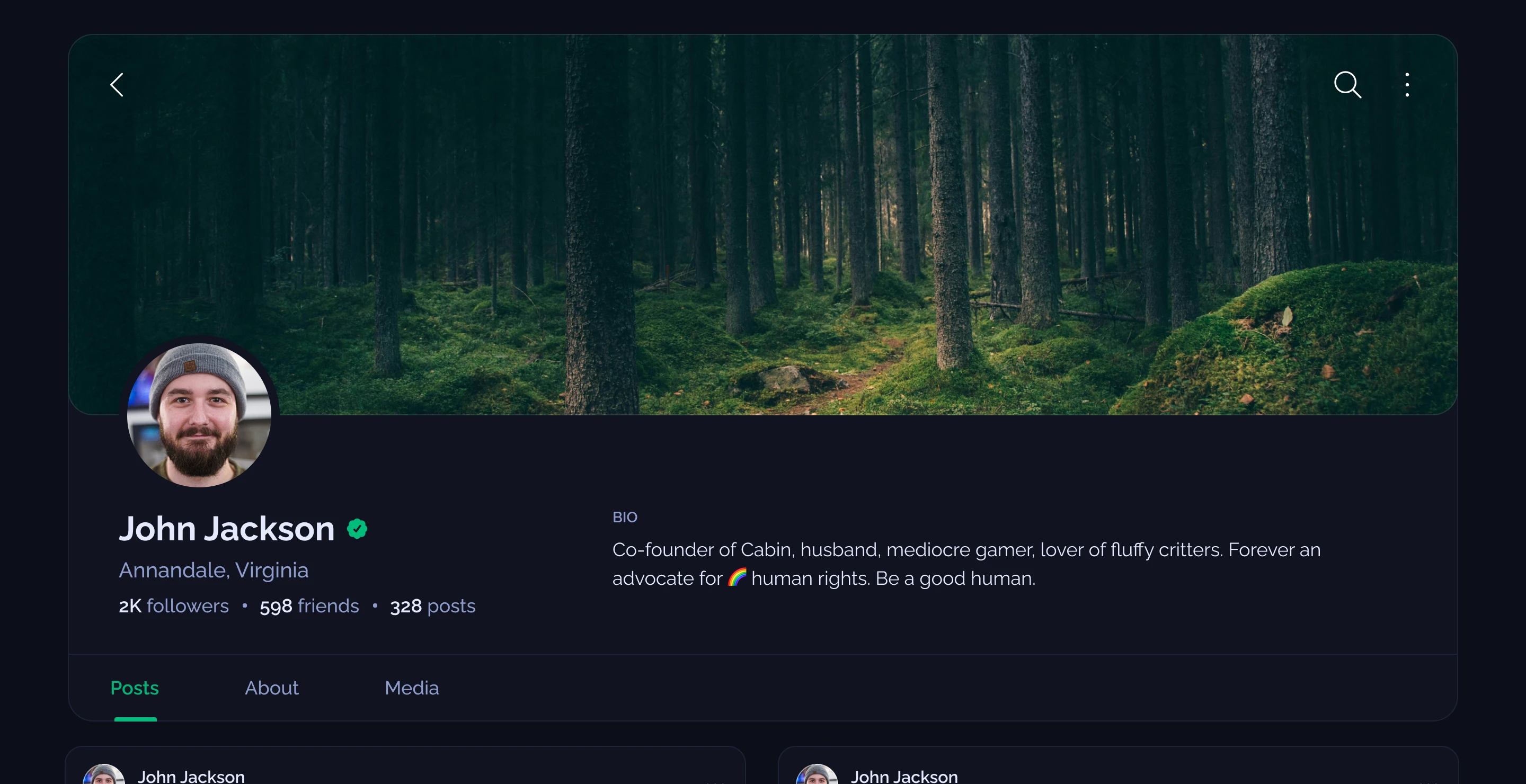
Cabin is an open-source, privacy-focused social network built on AT Protocol.
My role
I founded Cabin because I was tired of the unethical practices that major social networks employ, all in the name of profit. I have designed every aspect of the experience.
The team
We’re a team of two—myself and my technical co-founder.
Timeline
January 2026—ongoing
Problem
Social networks are designed to keep users engaged at all times, and at any cost.
From manipulative algorithms to unchecked misinformation, major social networks are destroying the fabric of our society.
Research
I spent time chatting with social media users to learn more about their challenges.
Our potential audience ranges from active social media users, to technology minimalists who simply wish for a basic way to stay connected, to people who are tired of the status quo.
Platforms leverage manipulative algorithms
Most existing platforms have carefully designed their algorithms to keep users glued to their devices. Platforms surface polarizing posts they know users will engage with, because their business models require engagement to survive.
Misinformation often goes unchecked
Platforms do a poor job of identifying and marking misinformation, the impact of which can be felt far outside the digital realm. Furthermore, politicians, media, and “influencers” are not held accountable for their contributions to the problem.
Ads are non-stop
Users generally understand the need for ads, but consider the frequency of ads troublesome.
Zero transparency
There is absolutely zero transparency when it comes to major platforms, as all source code is hidden from users.
Process
With limited resources and a need to get market signals, I took a more “scrappy” approach to my creative process.
The waitlist
One of my first tasks was to design and code a landing page so that we could drive sign-ups for our waitlist. This, after all, would serve as a signal to indicate interest in our mission.
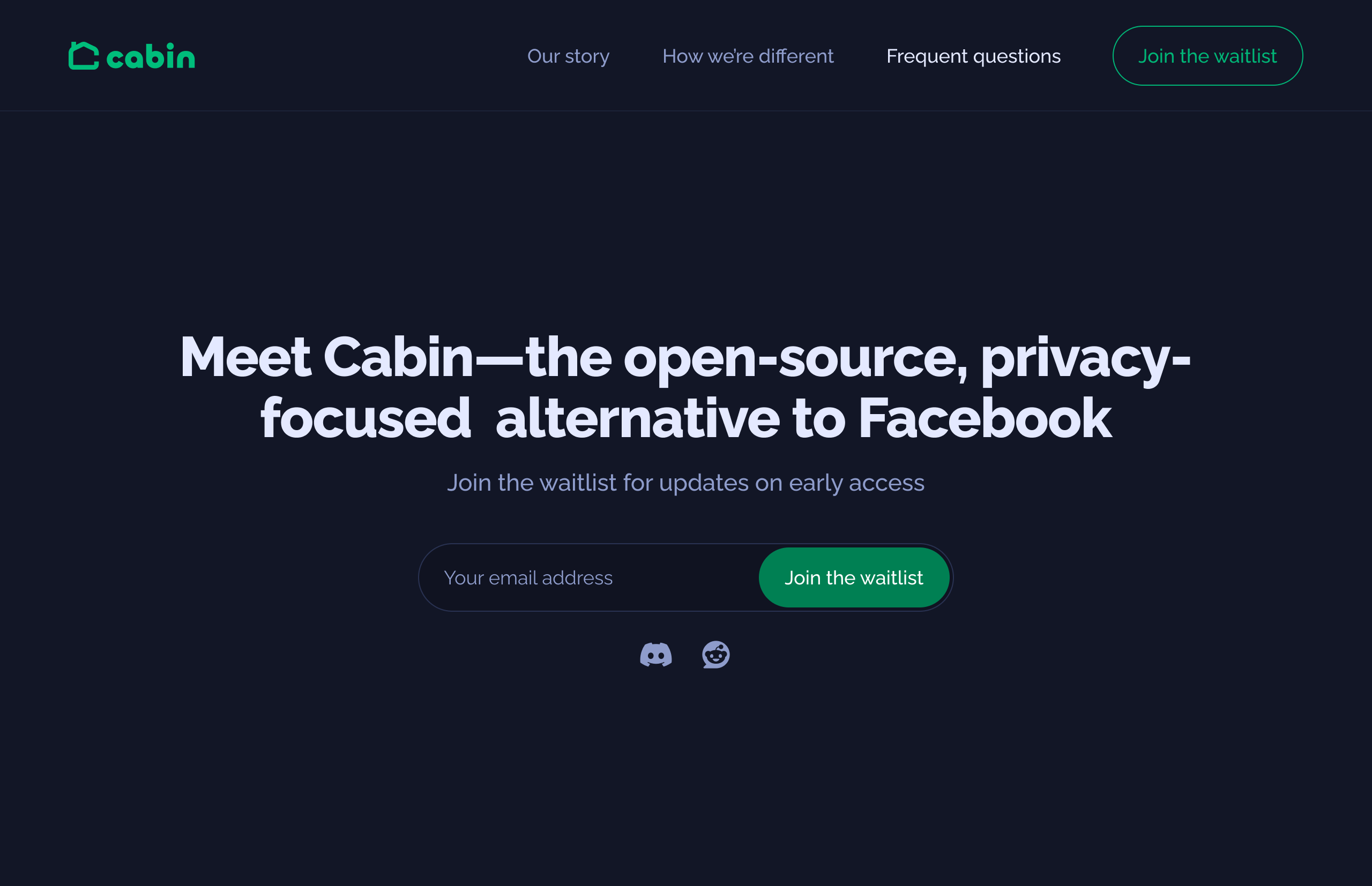
Pictured above is Cabin’s landing page.
Defining an MVP
My co-founder and I spent time talking through potential features and prioritized them based on the fundamental needs of our users, which are:
- The ability to befriend other Cabineers
- The ability to upload photos, videos, text posts, and polls
- The ability to browse a feed
- The ability to configure settings
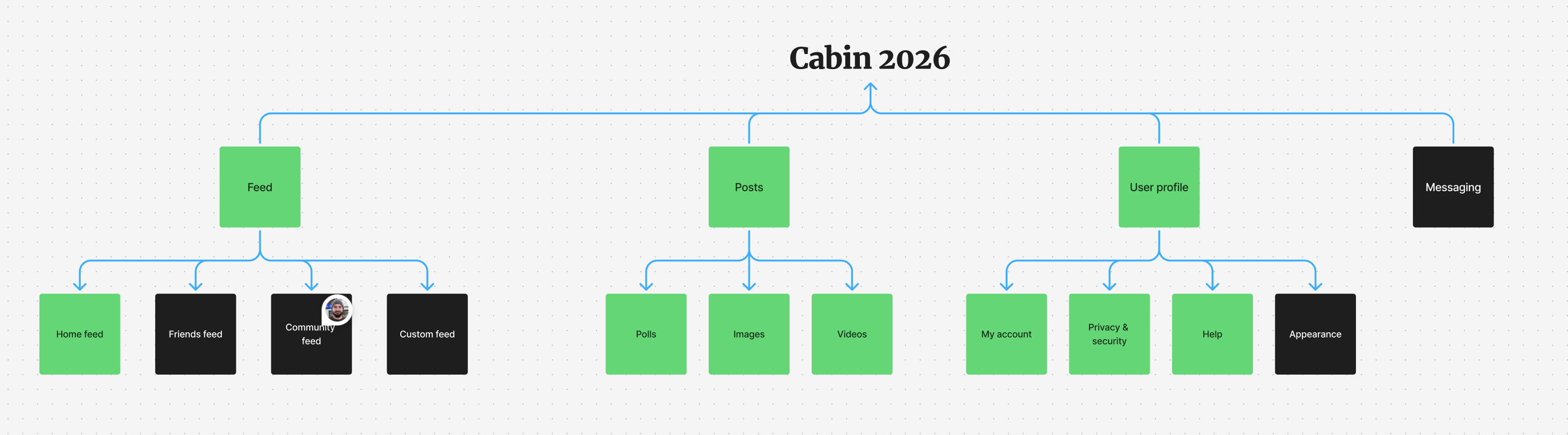
Pictured above is our initial MVP plan
Solution
One our landing page was complete, I shifted focus onto our MVP.
Onboarding
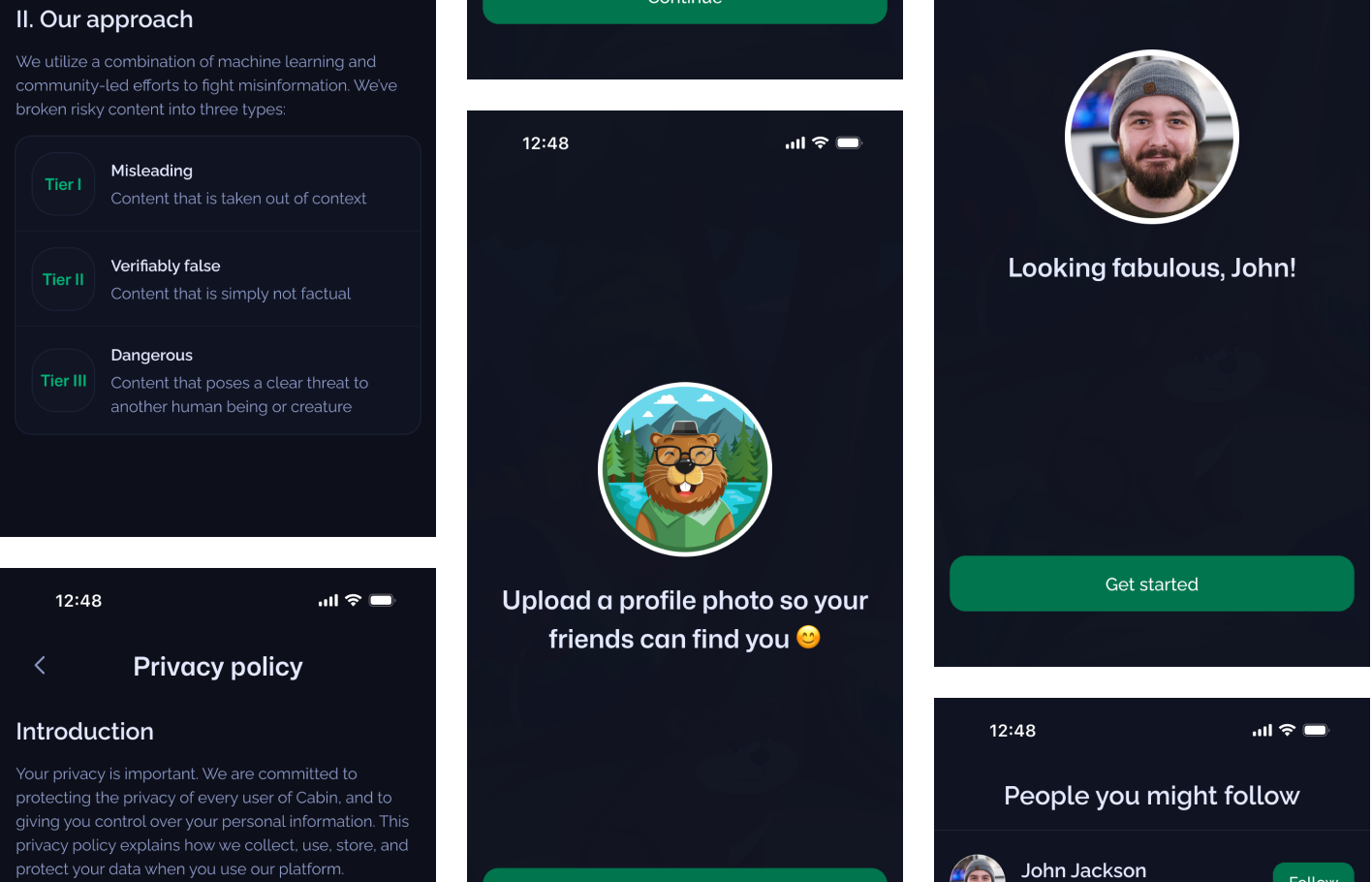
We wanted to launch with a proper onboarding flow to allow new users to easily create a Cabin account and profile.
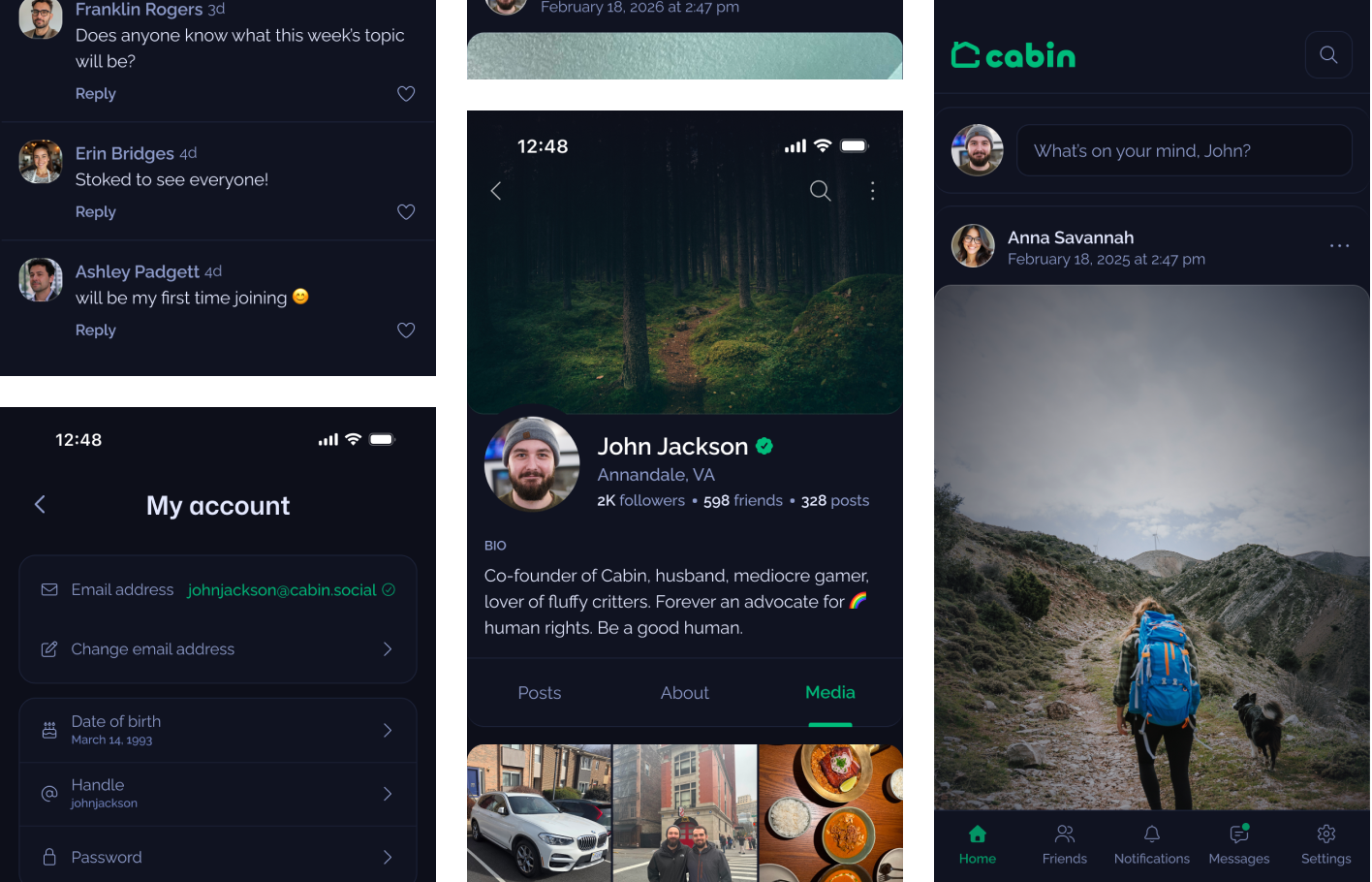
Core screens
I designed out our core screens, such as the user profile, user feed, posts, and account settings. This allowed my co-founder to begin developing the front-end as I wrapped up designs.
Hand-off
We leveraged Figma’s Dev Mode and MCP server to speed up our process.
Dev Mode has proven to be quite useful in the hand-off process. Combined with Figma’s MCP server, the time it takes us to implement creative on the front-end has significantly improved. Paired with annotations where needed, there are few times we need to chat through a feature for clarification.
Impact
We haven’t launched yet, but we have started to generate interest in Cabin!

+12% conversion on our landing page
We’re currently converting viewers of www.cabin.social at a little over 12%. I’m confident that with iterations, we’ll see that number increase.

+300 waitlist sign-ups since January 2026
Our growth has been organic, primarily through Reddit, Instagram, and Facebook channels. We continue to add to our waitlist with each passing day, and will continue to optimize our landing page as time progresses.

Early previews of Cabin have been positive
We have shared basic prototypes with potential users, who have helped shape the creative found today in Figma. The sentiment has been positive, and Cabin has won preference tests between Cabin and Facebook, giving further signals.

Cabin

Overview
Problem
Research
Process
Solution
Hand-off
Impact
Overview
Cabin is an open-source, privacy-focused social network built on AT Protocol.
My role
I founded Cabin because I was tired of the unethical practices that major social networks employ, all in the name of profit. I have designed every aspect of the experience.
The team
We’re a team of two—myself and my technical co-founder.
Timeline
January 2026—ongoing
Problem
Social networks are designed to keep users engaged at all times, and at any cost.
From manipulative algorithms to unchecked misinformation, major social networks are destroying the fabric of our society.
Research
I spent time chatting with social media users to learn more about their challenges.
Our potential audience ranges from active social media users, to technology minimalists who simply wish for a basic way to stay connected, to people who are tired of the status quo.
Platforms leverage manipulative algorithms
Most existing platforms have carefully designed their algorithms to keep users glued to their devices. Platforms surface polarizing posts they know users will engage with, because their business models require engagement to survive.
Misinformation often goes unchecked
Platforms do a poor job of identifying and marking misinformation, the impact of which can be felt far outside the digital realm. Furthermore, politicians, media, and “influencers” are not held accountable for their contributions to the problem.
Ads are non-stop
Users generally understand the need for ads, but consider the frequency of ads troublesome.
Zero transparency
There is absolutely zero transparency when it comes to major platforms, as all source code is hidden from users.
Process
With limited resources and a need to get market signals, I took a more “scrappy” approach to my creative process.
The waitlist
One of my first tasks was to design and code a landing page so that we could drive sign-ups for our waitlist. This, after all, would serve as a signal to indicate interest in our mission.
Pictured above is Cabin’s landing page.
Defining an MVP
My co-founder and I spent time talking through potential features and prioritized them based on the fundamental needs of our users, which are:
- The ability to befriend other Cabineers
- The ability to upload photos, videos, text posts, and polls
- The ability to browse a feed
- The ability to configure settings
Pictured above is our initial MVP plan
Solution
One our landing page was complete, I shifted focus onto our MVP.
Onboarding
We wanted to launch with a proper onboarding flow to allow new users to easily create a Cabin account and profile.
Core screens
I designed out our core screens, such as the user profile, user feed, posts, and account settings. This allowed my co-founder to begin developing the front-end as I wrapped up designs.
Hand-off
We leveraged Figma’s Dev Mode and MCP server to speed up our process.
Dev Mode has proven to be quite useful in the hand-off process. Combined with Figma’s MCP server, the time it takes us to implement creative on the front-end has significantly improved. Paired with annotations where needed, there are few times we need to chat through a feature for clarification.
Impact
We haven’t launched yet, but we have started to generate interest in Cabin!
+12% conversion on our landing page
We’re currently converting viewers of www.cabin.social at a little over 12%. I’m confident that with iterations, we’ll see that number increase.

+300 waitlist sign-ups since January 2026
Our growth has been organic, primarily through Reddit, Instagram, and Facebook channels. We continue to add to our waitlist with each passing day, and will continue to optimize our landing page as time progresses.
Early previews of Cabin have been positive
We have shared basic prototypes with potential users, who have helped shape the creative found today in Figma. The sentiment has been positive, and Cabin has won preference tests between Cabin and Facebook, giving further signals.
Cabin
Overview
Problem
Research
Process
Solution
Hand-off
Impact
Overview
Cabin is an open-source, privacy-focused social network built on AT Protocol.
My role
I founded Cabin because I was tired of the unethical practices that major social networks employ, all in the name of profit. I have designed every aspect of the experience.
The team
We’re a team of two—myself and my technical co-founder.
Timeline
January 2026—ongoing
Problem
Social networks are designed to keep users engaged at all times, and at any cost.
From manipulative algorithms to unchecked misinformation, major social networks are destroying the fabric of our society.
Research
I spent time chatting with social media users to learn more about their challenges.
Our potential audience ranges from active social media users, to technology minimalists who simply wish for a basic way to stay connected, to people who are tired of the status quo.
Platforms leverage manipulative algorithms
Most existing platforms have carefully designed their algorithms to keep users glued to their devices. Platforms surface polarizing posts they know users will engage with, because their business models require engagement to survive.
Misinformation often goes unchecked
Platforms do a poor job of identifying and marking misinformation, the impact of which can be felt far outside the digital realm. Furthermore, politicians, media, and “influencers” are not held accountable for their contributions to the problem.
Ads are non-stop
Users generally understand the need for ads, but consider the frequency of ads troublesome.
Zero transparency
There is absolutely zero transparency when it comes to major platforms, as all source code is hidden from users.
Process
With limited resources and a need to get market signals, I took a more “scrappy” approach to my creative process.
The waitlist
One of my first tasks was to design and code a landing page so that we could drive sign-ups for our waitlist. This, after all, would serve as a signal to indicate interest in our mission.
Pictured above is Cabin’s landing page.
Defining an MVP
My co-founder and I spent time talking through potential features and prioritized them based on the fundamental needs of our users, which are:
- The ability to befriend other Cabineers
- The ability to upload photos, videos, text posts, and polls
- The ability to browse a feed
- The ability to configure settings
Pictured above is our initial MVP plan
Solution
One our landing page was complete, I shifted focus onto our MVP.
Onboarding
We wanted to launch with a proper onboarding flow to allow new users to easily create a Cabin account and profile.
Core screens
I designed out our core screens, such as the user profile, user feed, posts, and account settings. This allowed my co-founder to begin developing the front-end as I wrapped up designs.
Hand-off
We leveraged Figma’s Dev Mode and MCP server to speed up our process.
Dev Mode has proven to be quite useful in the hand-off process. Combined with Figma’s MCP server, the time it takes us to implement creative on the front-end has significantly improved. Paired with annotations where needed, there are few times we need to chat through a feature for clarification.
Impact
We haven’t launched yet, but we have started to generate interest in Cabin!
+12% conversion on our landing page
We’re currently converting viewers of www.cabin.social at a little over 12%. I’m confident that with iterations, we’ll see that number increase.
+300 waitlist sign-ups since January 2026
Our growth has been organic, primarily through Reddit, Instagram, and Facebook channels. We continue to add to our waitlist with each passing day, and will continue to optimize our landing page as time progresses.
Early previews of Cabin have been positive
We have shared basic prototypes with potential users, who have helped shape the creative found today in Figma. The sentiment has been positive, and Cabin has won preference tests between Cabin and Facebook, giving further signals.